
Loading...
← Back to Blog
THE MAN WHO BOUGHT HIS OWN VILLAGE (AND MISSED THE TITANIC)

By MJ O'Connor
Picture Leitrim in the early 1890s. Michael J. O'Connor is a teenager, about to do what half the country was doing get on a boat to America. Nothing unusual there.
Here's what was unusual: before he'd even left, Michael had already decided what he was coming back to do.
He was going to own the village.
Not "do well for himself." Not "send money home." Own it. The whole village of Leitrim. The place he was leaving as a fella with nothing was, in his head, already his.
Bold. Borderline delusional. Exactly the kind of ambition you want behind a good story.
To understand why, you need to go back a generation further.
Michael's grandfather once tried to build a castle in Leitrim a proper rival to the big house down the road, Drumhierney, home of the powerful La Touche family, who'd run the show locally since Cromwell's time. The La Touches didn't love the competition. Between their money and their muscle, grandfather O'Connor's castle never got past the foundations.
The neighbors had a name for the ruin: O'Connor's Folly.
Kids at school used to slag young Michael about it. Your granda's big castle sure it never even had walls.
Some people let that go. Michael apparently filed it away.
Off to America Michael went. Two years of business school, then straight into making money and saving it. Every spare dollar went into a pot marked "someday."
Someday came about seven years later. Michael bought the village of Leitrim outright. He didn't even have to cross the Atlantic to do it he ran the whole deal through a solicitor in Dublin while he stayed put in America. That's a man who plans.
Village: bought. One item left on the list.
In December 1911, the last of the La Touches, Francis, died. The Drumhierney estate the very house that had loomed over Michael's family for a generation was going to auction.
A relative back in Leitrim fired off a cable to New York with the news.
Michael was on a boat within two days.
Nobody else bid against him. The grandson of the man behind "O'Connor's Folly" walked away with the La Touche family seat: 425 acres, a six-bedroom manor house, trout streams, game in the woods, land running down to the Shannon. When he arrived back in the village, they didn't let it pass quietly brass band, full parade, the works. The emigrant boy come home a landlord.
He told the New York Sun exactly what the place meant to him:
"'Tis a beautiful spot. Across the Shannon is the famous Battle Bridge leading to County Roscommon... You may remember Tom Moore's ballad, 'The Valley Lay Smiling Before Me.' He sang of the Leitrim country when he wrote that."
And he wasn't planning to swan about playing country gentleman, either:
"I want to see my native home prosper. Fifty years ago the brickyard which furnished employment for the men was shut down. I intend to start it up again... Shall I be a harsh landlord? I shall not."
A thousand people in the village were now, technically, his tenants. By his own account, he had no intention of lording it over them the way the La Touches once had.
Business in Ireland done, Michael went to book his ticket home the obvious way for a rich man in 1912: he wired the White Star Line and asked for a stateroom on their brand-new flagship liner.
Sold out. Not a berth to be had.
So he took the next best thing Cunard's Mauretania and sailed for America instead.
Somewhere mid-Atlantic, word reached him: the ship he'd tried to book had struck an iceberg and gone down, taking over 1,500 people with her.
The New York Sun, interviewing him weeks later, didn't undersell it. Michael O'Connor, they said, had just had "another piece of luck."
By the time the story ran in June 1912, Michael was thirty-seven, married, two kids, a brother and sister still back in Leitrim. He wasn't moving home his life was in America but he planned to bring the family back to Leitrim for two months every year, to the house his family had once been mocked for trying to rival.
The lad who left with nothing but a grudge and an ambition came home owning the village and the estate that started it all. And he very nearly didn't come home at all.
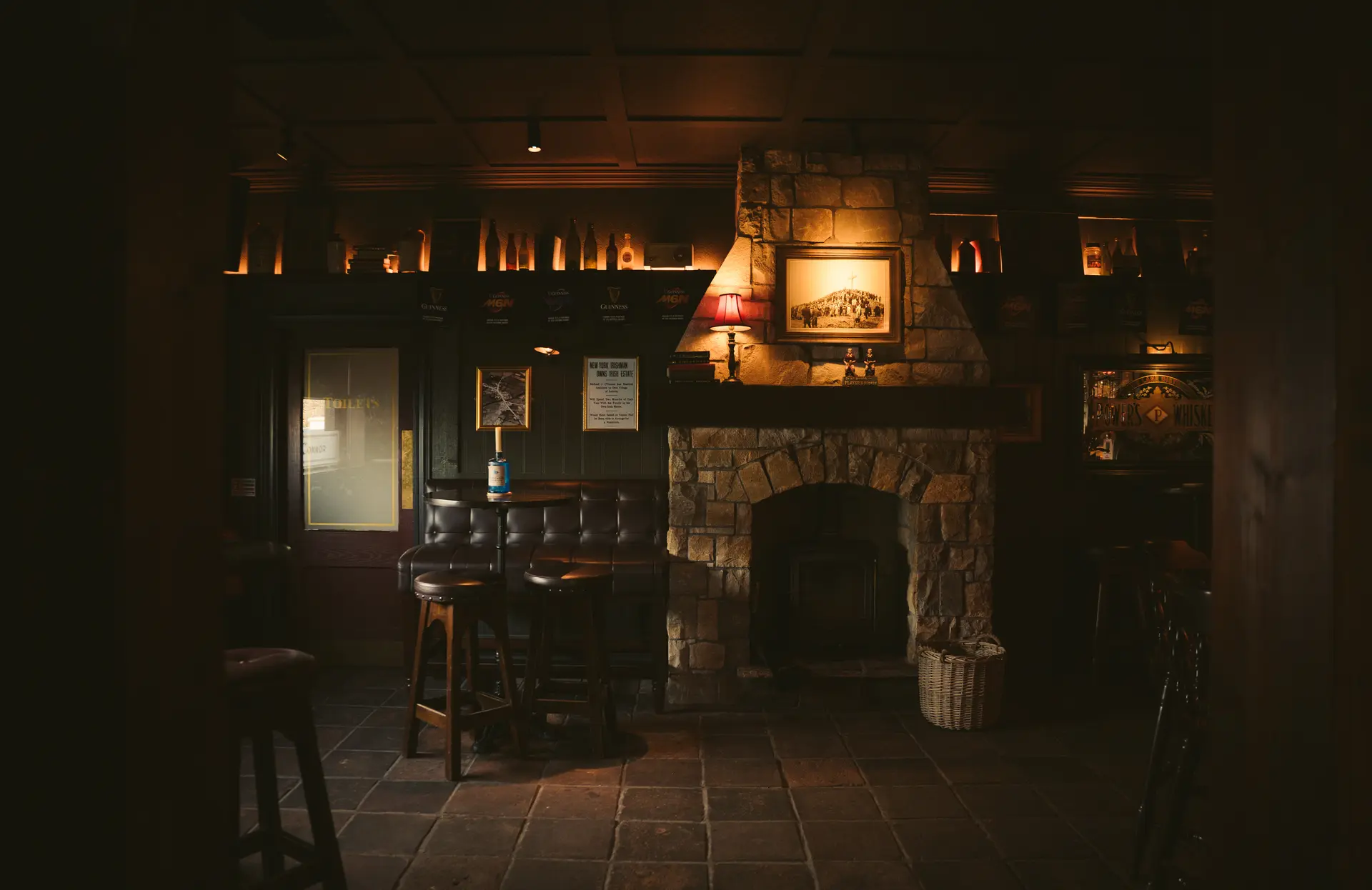
That's the man whose name is over our door.
So next time you're at the bar raise the glass to MJ: the emigrant who made good, bought back his own village, settled an old score with the big house up the road, and dodged the most famous shipwreck in history along the way.
Sourced from a contemporary interview published in The Irish Standard (Minneapolis), 8 June 1912, originally run in the New York Sun.
Thur (Lunch & Dinner)
12:00 PM - 3:00 PM ( Lunch) 5:00 PM -8:30 PM ( Dinner)
Fri (Lunch & Dinner)
12:00 PM - 3:00 PM ( Lunch), 4:00 PM -8:30 PM ( Dinner)
Sat (Dinner)
2:00 PM – 8:30 PM
Sun (Dinner)
2:00 PM – 7:30 PM
Bar Hours
Mon & Tue
4:00 PM - 11:30 PM
Wed
12:00 PM - 11:30 PM
Thur - Sat
12:00 PM - 12:30 AM
Sun
12:00 PM - 11:30 PM
© 2026 M.J. O'Connor. All rights reserved.